ISSUE 01
Render To Reality

By
Joseph Willoughby, Founder + Creative Director
07.07.26
/
5 min.
SHARK Ninja Fan house
Client: SharkNinja x Amazon
Agency Partner: TasteCity Media Group Inc.
Location: Toronto, Canada
Services: 3D Visualisation / Spatial Design / Experiential Concept Development
Every physical experience starts as something that doesn’t exist yet.
A conversation. A sketch. A collection of ideas waiting to become something tangible.
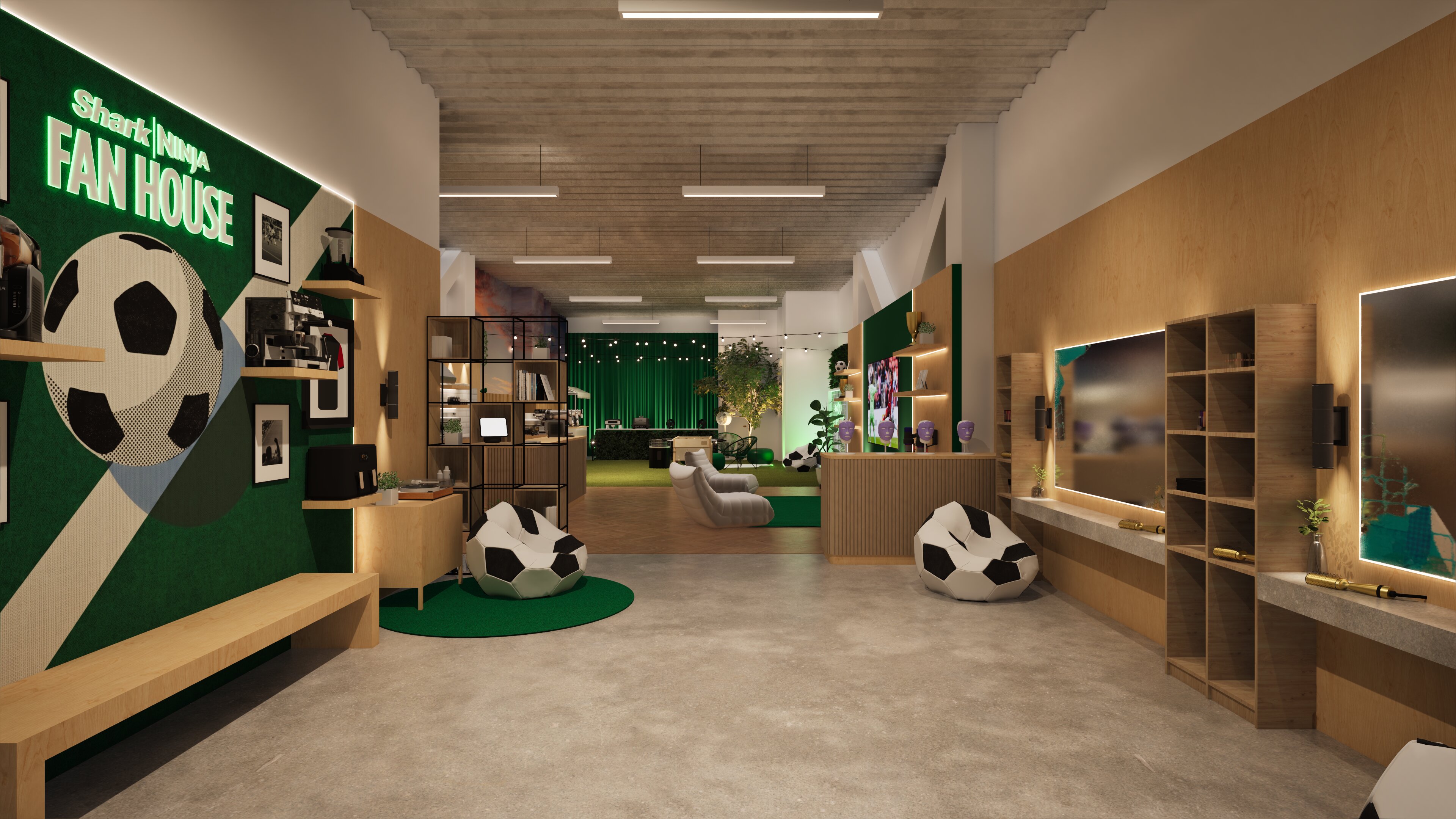
For the SharkNinja Fan House in Toronto, the challenge was transforming an initial brand concept into a real-world experience, helping the team visualise how an idea could move from the digital space into a physical environment.
Through 3D visualisation and spatial storytelling, my role was to help bridge that gap, creating a visual roadmap that allowed the team to explore, refine, and communicate the experience before it was built.
01: Starting With The Story
The starting point was not the space itself, but the feeling the brand wanted visitors to experience.
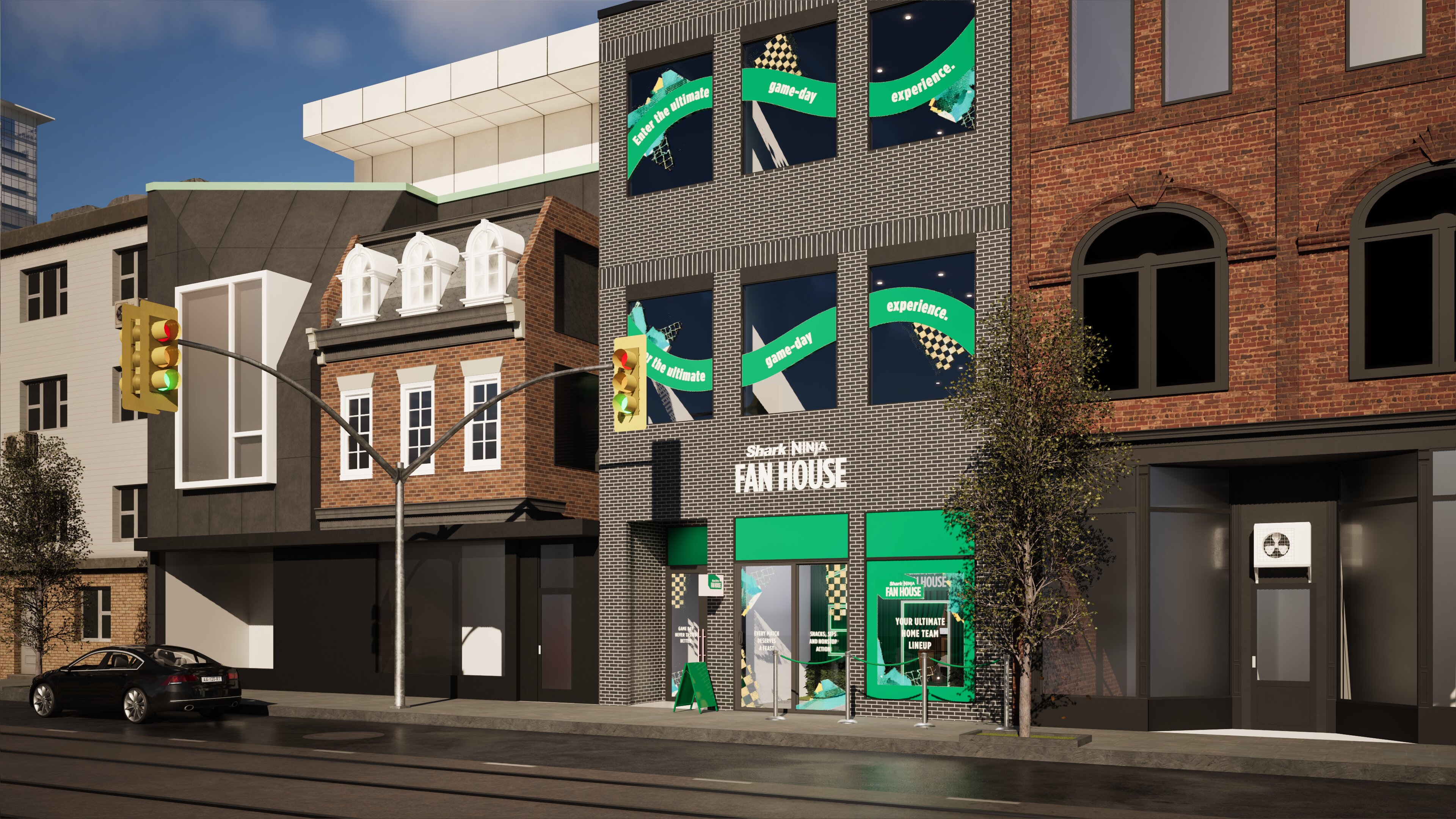
TasteCity Media Group Inc., a Toronto-based marketing agency, approached me to help bring their initial concept for SharkNinja x Amazon’s Fan House activation to life. The goal was to transform the brand’s online presence into an immersive environment where guests could experience the products in a more personal and engaging way.
The vision was to create a space that felt like an extension of the home, welcoming visitors in from the busy streets of Queen Street West and into an environment where SharkNinja products naturally belonged.
Before thinking about materials, graphics, or final visuals, the first step was understanding the context.
The venue, surrounding streetscape, and customer journey became the foundation of the project. Great experiential design starts by understanding not just what happens inside a space, but how people discover and interact with it.
02: Exploring The Space
Whether working on a small activation or a larger experiential environment, I always begin by building the context in 3D.
Understanding the surrounding space helps answer important questions early:
How does someone approach the activation?
What catches their attention from the outside?
How do people move through the experience?
Where are the key moments of interaction?
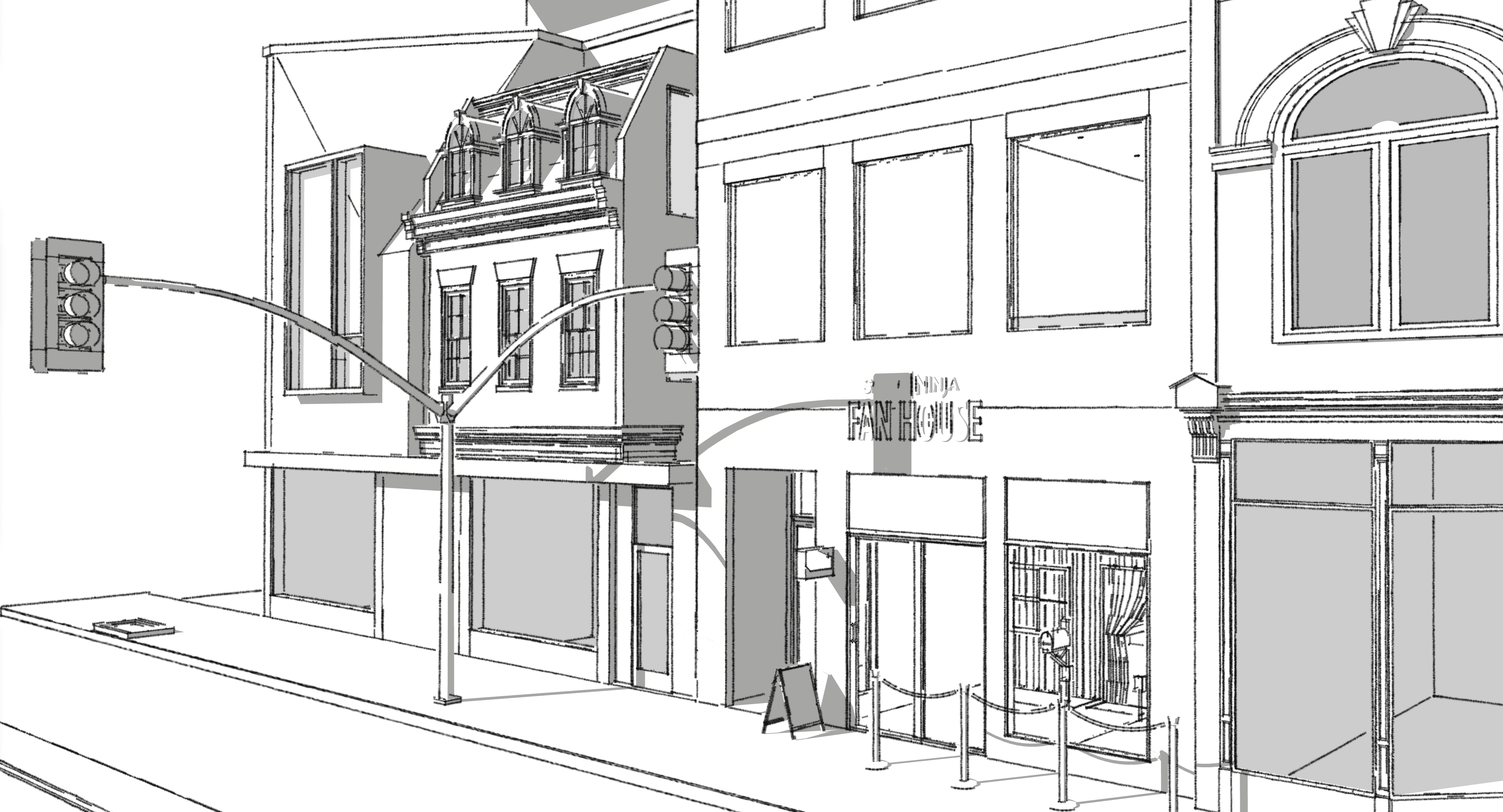
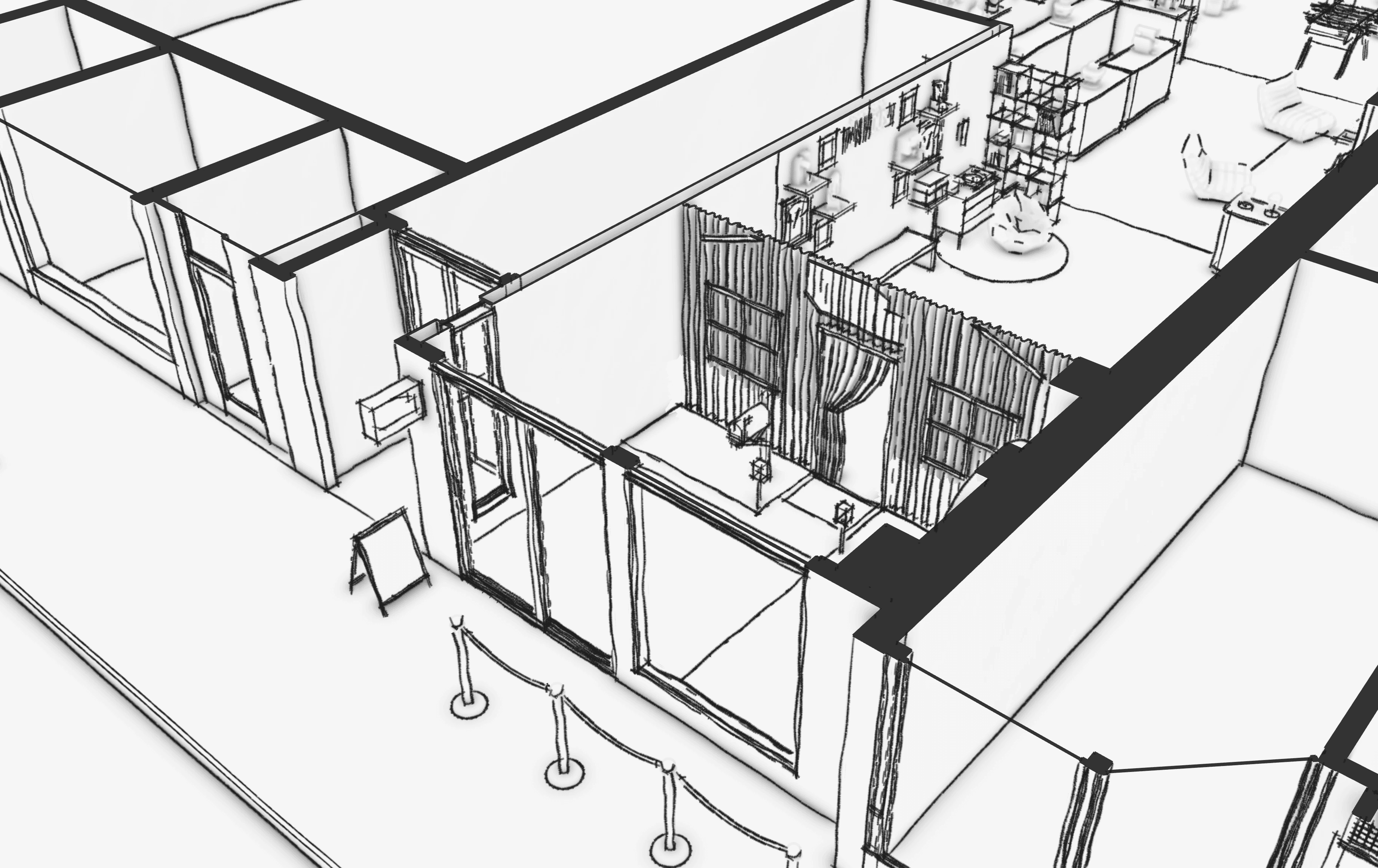
Creating a digital model of the venue allows ideas to be explored before committing to final design decisions.
Alongside 3D modelling, I find that returning to something simple, a pen and paper, is often where the strongest ideas begin. Early sketches allow us to quickly explore layouts, sight lines, and customer flow before moving into more detailed design development.
For the SharkNinja Fan House, these early studies helped establish the direction of the space and gave the wider team a shared understanding of how the experience could come together.
03: Creating Confidence Before Production
The final render is often the most visible part of the process, but it is only one step in the journey.
3D visualisation is a tool for communication. It helps brands, agencies, and production teams align around the same vision before construction begins.
Detailed renders allow teams to:
refine ideas before final approval
understand the atmosphere and experience
communicate designs with fabricators and vendors
identify potential challenges early
The purpose is not simply to create a beautiful image.
It is to create confidence around an idea before it becomes reality

04: Seeing It Come To Life
There is always something special about seeing a project move from a computer screen into a physical space.
After building the SharkNinja Fan House digitally, seeing the finished activation take shape in Toronto was a reminder of why visualisation plays such an important role in experiential design.
The render is only the beginning.
The real achievement is seeing an idea become a place where people can interact, explore, and create memories.
05: Beyond The Render
Every activation begins with a vision that exists only in someone’s head.
At Willoughby Studio, the goal is to help brands and agencies turn those early ideas into clear, tangible experiences, connecting creative ambition with the reality of production.
From concept to completion, transforming ideas into spaces people can experience.